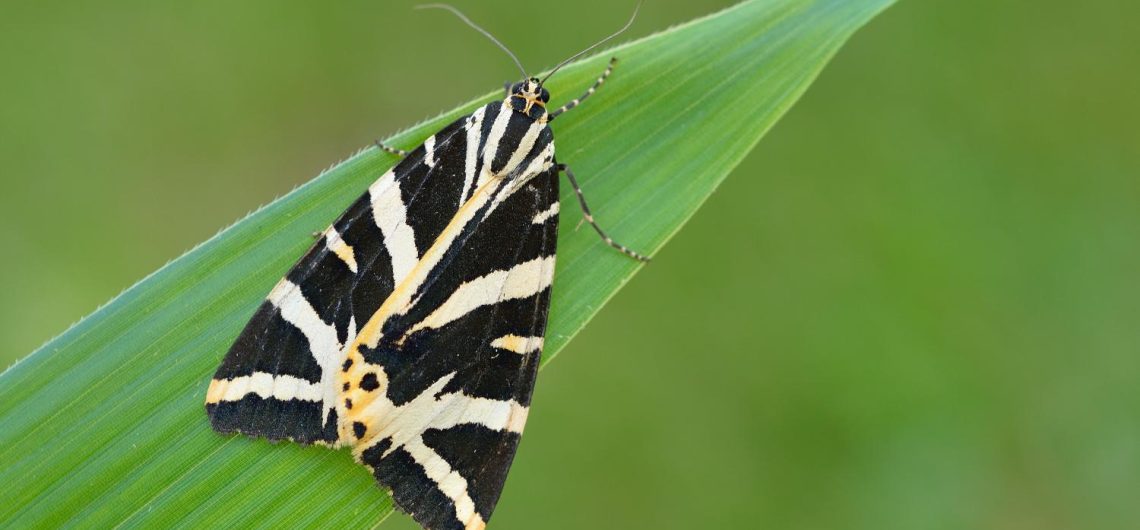
If you find yourself wandering along the ancient Lycian Way here on Turkey’s Turquoise Coast — perhaps just a stone’s throw from where we are in Muğla — you might stumble upon one of the Mediterranean's best-kept ecological secrets. Nestled between towering, 350-meter-high cliffs at the foothills of Mount Babadağ lies Kelebekler Vadisi, or Butterfly Valley. While the valley is home to over 80 species of butterflies and moths, there is an undisputed star of the show: the Jersey Tiger Moth (Euplagia quadripunctaria). The Master of Disguise and Warning Despite the word "butterfly" in the valley's name, the Jersey Tiger is actually a diurnal (day-flying) moth. When resting on a tree trunk or a damp rock, the moth looks almost unassuming. Its forewings are painted with striking black and creamy-white geometric stripes that act as excellent camouflage among the dappled shadows of leaves and branches. However, when startled into flight, it reveals a shocking flash of bright red or orange underwings decorated with dark spots. This sudden burst of color isn't just for show; it’s a defense mechanism known as aposematism. The vibrant red serves as a biological stop sign, warning potential predators that the moth is toxic or foul-tasting. Why Are They So Rare? While the Jersey Tiger Moth can be found scattered across Europe, the mass swarming phenomenon seen in Turkey is exceptionally rare. The moths require a very specific, humid microclimate to survive and breed. Butterfly Valley provides the perfect storm of ecological conditions: plunging waterfalls, abundant Oriental Sweetgum (sığla) trees, and a shaded, canyon-like geography that traps moisture. From late May to September, thousands of these moths gather to aestivate (shelter from the intense Mediterranean summer heat) and breed. A tragic biological quirk: By the time the Jersey Tiger Moth reaches its final, reproductive adult stage,
If you find yourself wandering along the ancient Lycian Way here on Turkey’s Turquoise Coast — perhaps just a stone’s throw from where we are in Muğla — you might stumble upon one of the Mediterranean’s best-kept ecological secrets. Nestled between towering, 350-meter-high cliffs at the foothills of Mount Babadağ lies Kelebekler Vadisi, or Butterfly Valley. While the valley is home to over 80 species