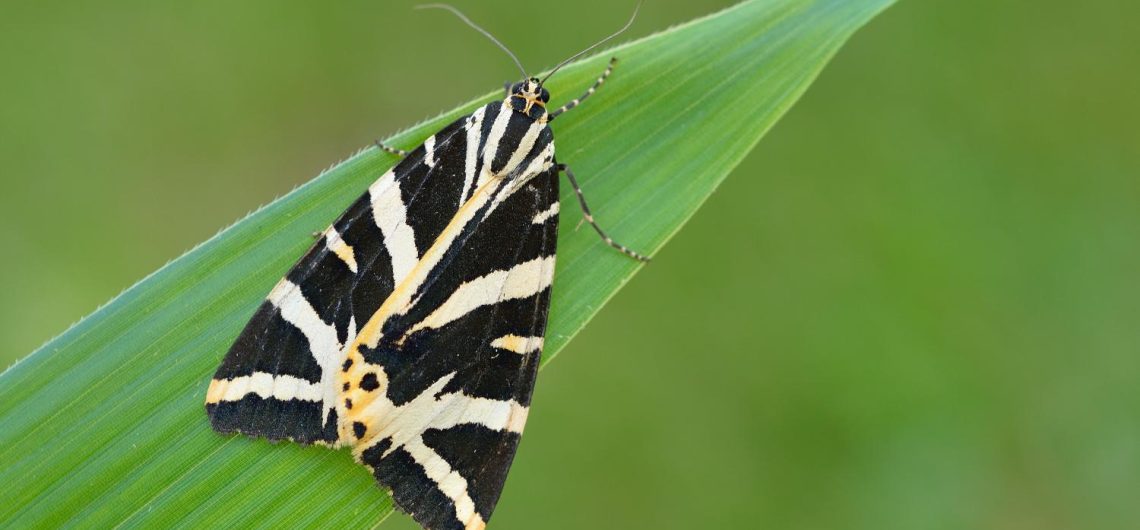
If you find yourself wandering along the ancient Lycian Way here on Turkey’s Turquoise Coast — perhaps just a stone’s throw from where we are in Muğla — you might stumble upon one of the Mediterranean’s best-kept ecological secrets. Nestled between towering, 350-meter-high cliffs at the foothills of Mount Babadağ lies Kelebekler Vadisi, or Butterfly Valley.
While the valley is home to over 80 species of butterflies and moths, there is an undisputed star of the show: the Jersey Tiger Moth (Euplagia quadripunctaria).
The Master of Disguise and Warning
Despite the word “butterfly” in the valley’s name, the Jersey Tiger is actually a diurnal (day-flying) moth.
When resting on a tree trunk or a damp rock, the moth looks almost unassuming. Its forewings are painted with striking black and creamy-white geometric stripes that act as excellent camouflage among the dappled shadows of leaves and branches. However, when startled into flight, it reveals a shocking flash of bright red or orange underwings decorated with dark spots.
This sudden burst of color isn’t just for show; it’s a defense mechanism known as aposematism. The vibrant red serves as a biological stop sign, warning potential predators that the moth is toxic or foul-tasting.

Why Are They So Rare?
While the Jersey Tiger Moth can be found scattered across Europe, the mass swarming phenomenon seen in Turkey is exceptionally rare.
The moths require a very specific, humid microclimate to survive and breed. Butterfly Valley provides the perfect storm of ecological conditions: plunging waterfalls, abundant Oriental Sweetgum (sığla) trees, and a shaded, canyon-like geography that traps moisture.
From late May to September, thousands of these moths gather to aestivate (shelter from the intense Mediterranean summer heat) and breed.
A tragic biological quirk: By the time the Jersey Tiger Moth reaches its final, reproductive adult stage, it has no functioning stomach. Unable to eat, the moths must survive entirely on the energy reserves they built up as caterpillars. This is why they spend most of their days resting motionless near the waterfalls. Forcing them to fly unnecessarily drains their limited energy, which can literally cost them their lives before they have a chance to reproduce.
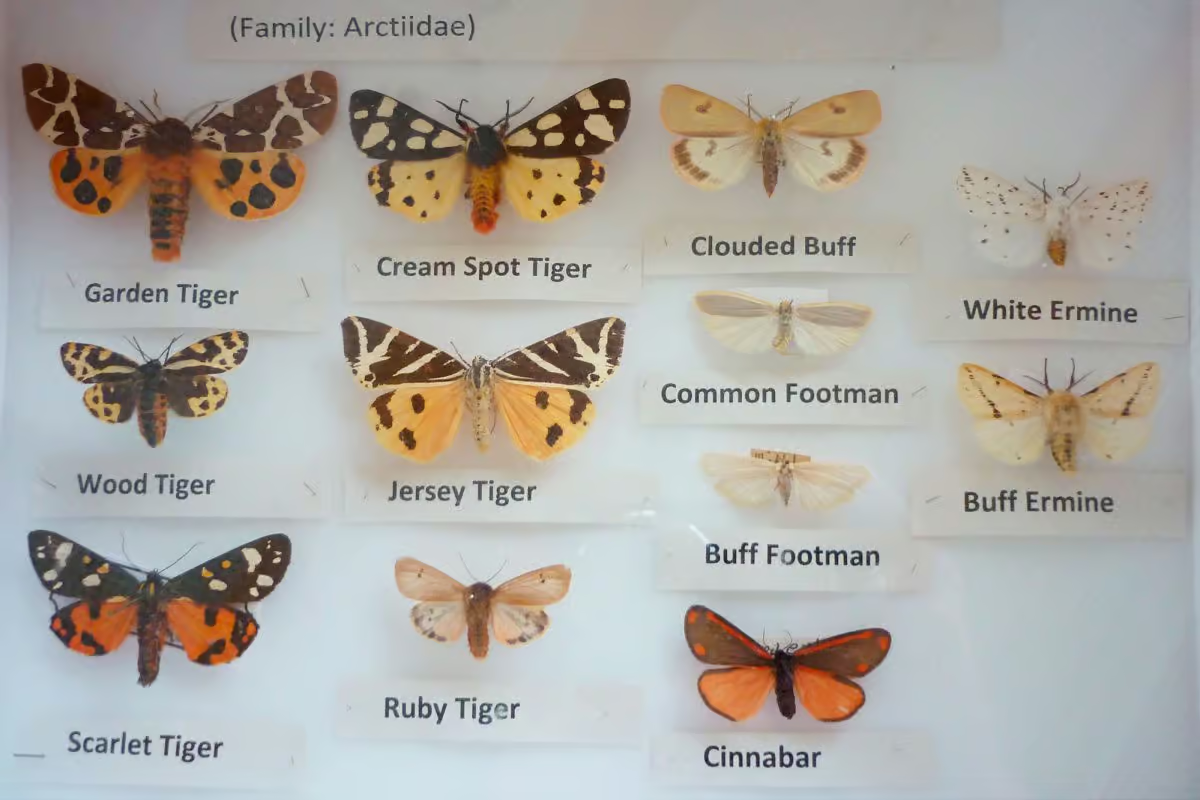
Beyond the Valley: The Secret of Yuvarlakçay
While Butterfly Valley gets all the international fame, locals know it isn’t the only sanctuary for the Jersey Tiger Moth. Just a short journey inland toward the Köyceğiz district lies Yuvarlakçay — a breathtaking, ice-cold river gorge that offers another hidden haven for these magnificent insects.
Yuvarlakçay shares the same crucial ecological ingredients as Butterfly Valley: deep shade, rushing fresh water that cools the ambient air, and dense forests of endemic Sweetgum trees. Escaping the sweltering coastal sun, populations of the Jersey Tiger Moth retreat into the cool, humid microclimate of the Yuvarlakçay canyon.
For visitors enjoying a traditional breakfast over the rushing waters of Yuvarlakçay, spotting the sudden red flash of a tiger moth flitting between the Sweetgum branches is a rare and magical experience, away from the heavy tourist boat traffic of the coast.
A Living Natural History Museum
Historically, the Lycian coast has seen empires rise and fall, from ancient Greeks and Romans to the Ottomans. But tucked away from human history, these deep valleys and river gorges remained isolated sanctuaries. Their steep cliffs and rushing rivers made them incredibly difficult to access or develop, unintentionally preserving the delicate habitat for centuries.
It wasn’t until the 20th century that the area gained international attention from botanists and entomologists. Realizing the fragility of this unique ecosystem, the Turkish government declared Butterfly Valley a highly protected Class 1 natural reserve on February 8, 1995.
Today, whether you are hiking the steep trails near Ölüdeniz or resting by the cool waters of Köyceğiz, protecting these moths means respecting their space. If you are lucky enough to encounter a swarm resting on the rocks, tread lightly, stay quiet, and let these beautiful “tigers” save their energy for the next generation.
Comments